
The Gulls
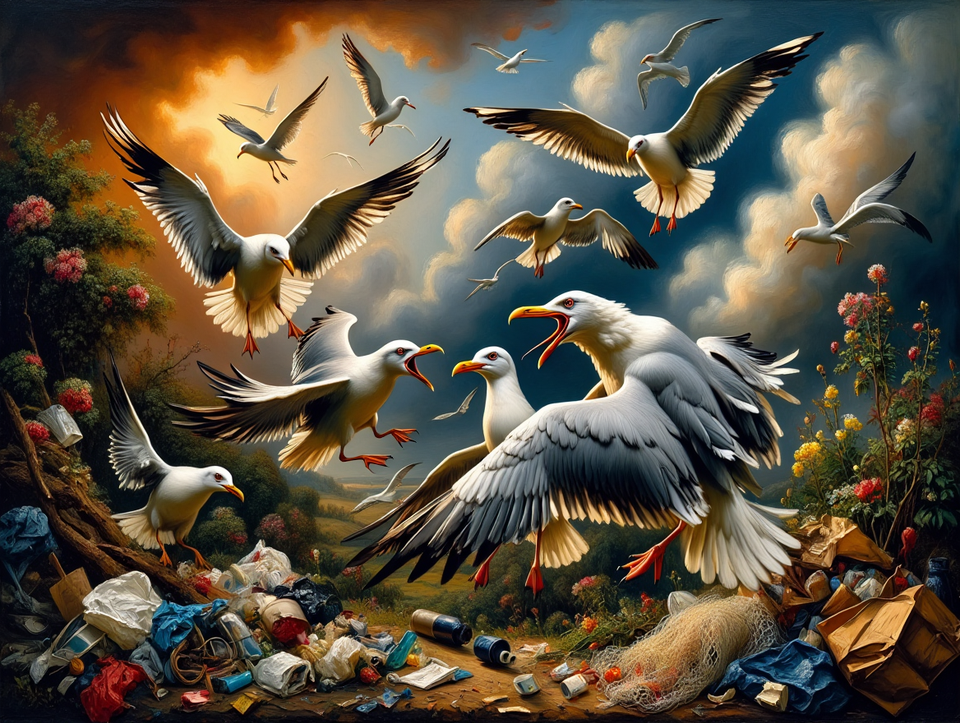
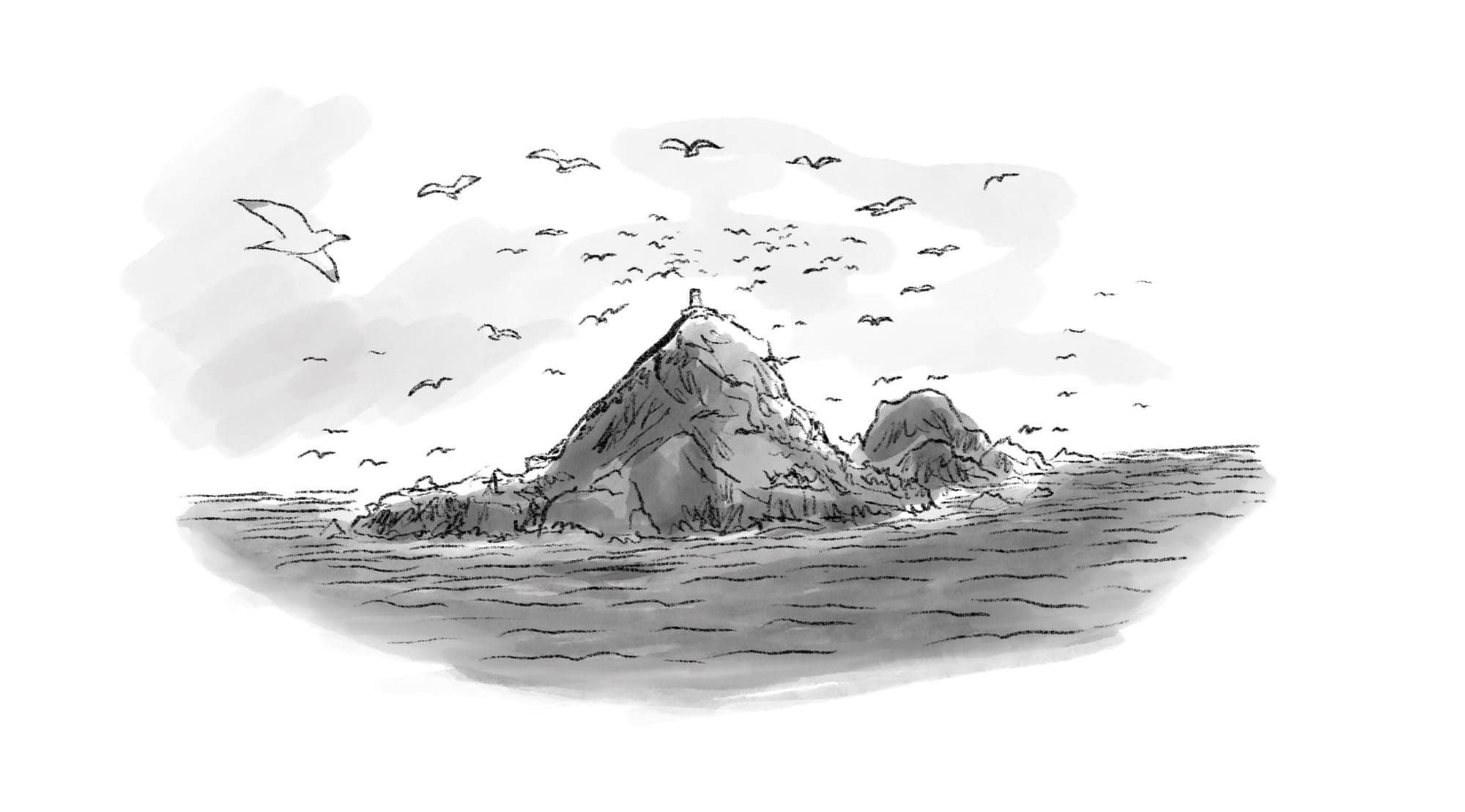
Twenty six miles out in the Pacific Northwest's ocean, there's an island swarming with gulls.
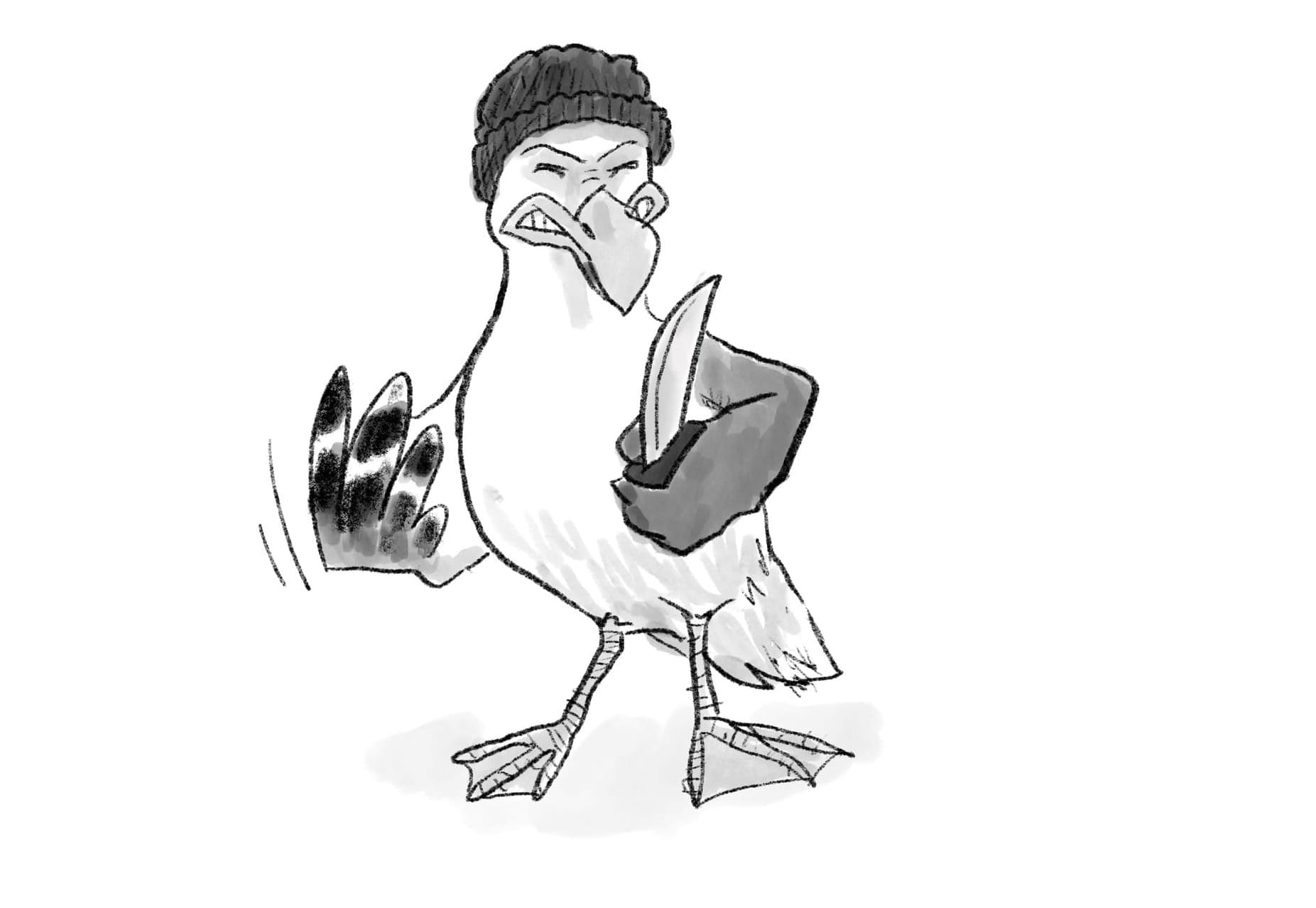
Western gulls (Larus occidentalis) are aggressive.
They come to the mainland for food, hovering around the rocky coast and squawking at anything edible. As omnivores, they're pretty flexible in their diet. They're equally happy to pilfer from garbage cans or sea lion carcasses.
You could call them, "the raccoons of the sky".
Rumors of western gulls clobbering pigeons to death, or stealing milk from nursing elephant seals are unsubstantiated, but not impossible to envision. They are street smart, in-your-face tough, and happy to take your lunch (then fly back home and regurgitate it to their young).
But birds find different stuff valuable compared to people.
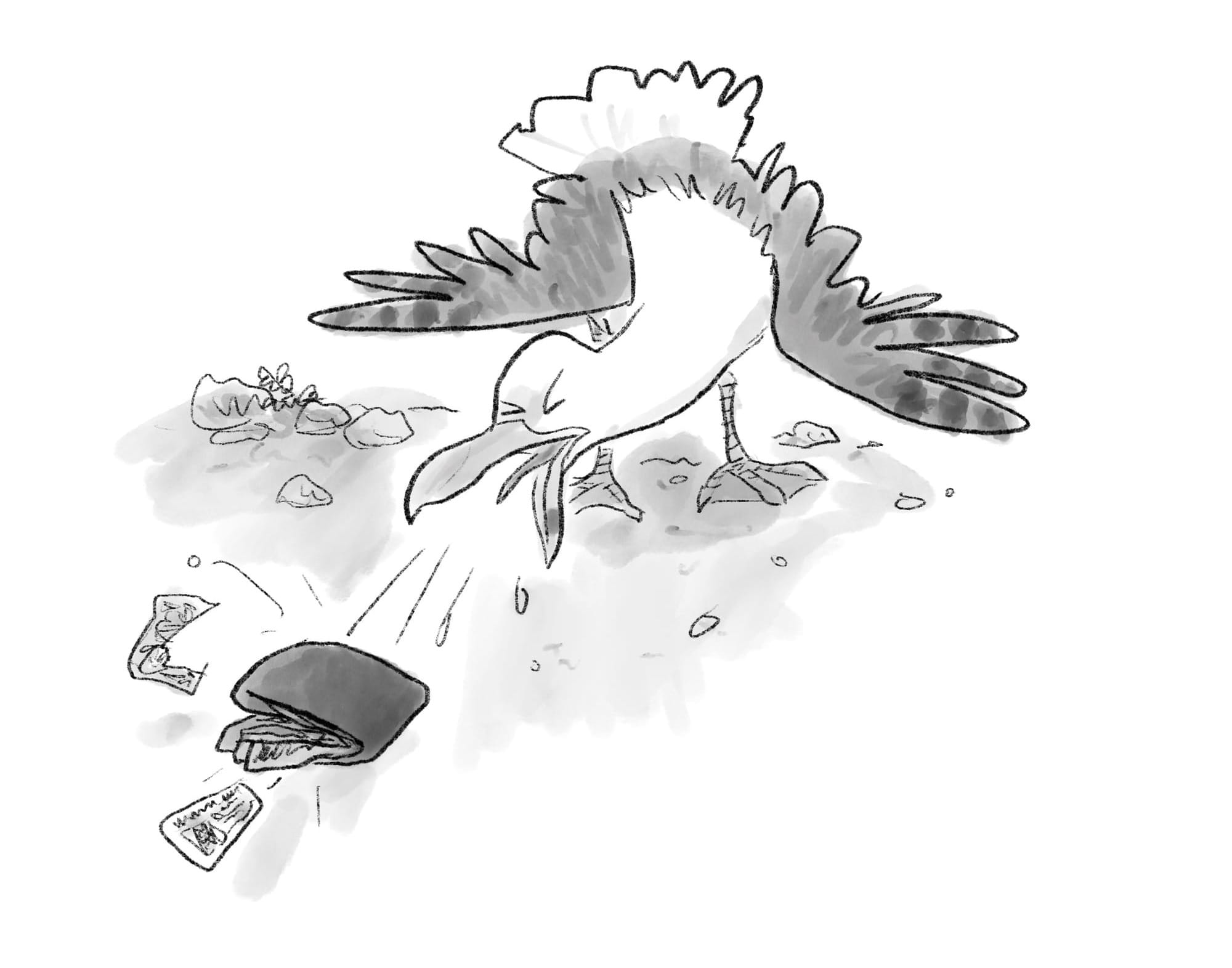
It is not uncommon, for example, to find an entire wallet in the field of scree where they nest. A gull's preferred strategy, when popping into the city for food, is to snatch-and-grab.
They only realize the in-edibility of an item once they get back to the island.
The good news is that the gulls, despite causing the occasional inconvenience of reporting a lost credit card,* are doing quite well.
Not too long ago, this island was a pillaging site for nearby humans–they wanted meat and eggs, and like inter-species Vikings, they sailed out here and caused havoc. Some of the inhabitants (marine mammals) were slaughtered, and the rest had their valuables raided.
In this case of the gulls, it was their eggs.
But thanks to federal protections, what was once a breakfast-items-harvesting apocalypse is now a thriving community. Most western gulls breed here every year, and the population has made a major rebound.
They haven't forgotten the lessons about humans, though. Because, if you're a tender-hearted intern looking for field experience (as I was) you learn quickly to wear protection when headed into gull territory.
Which means a hard hat.
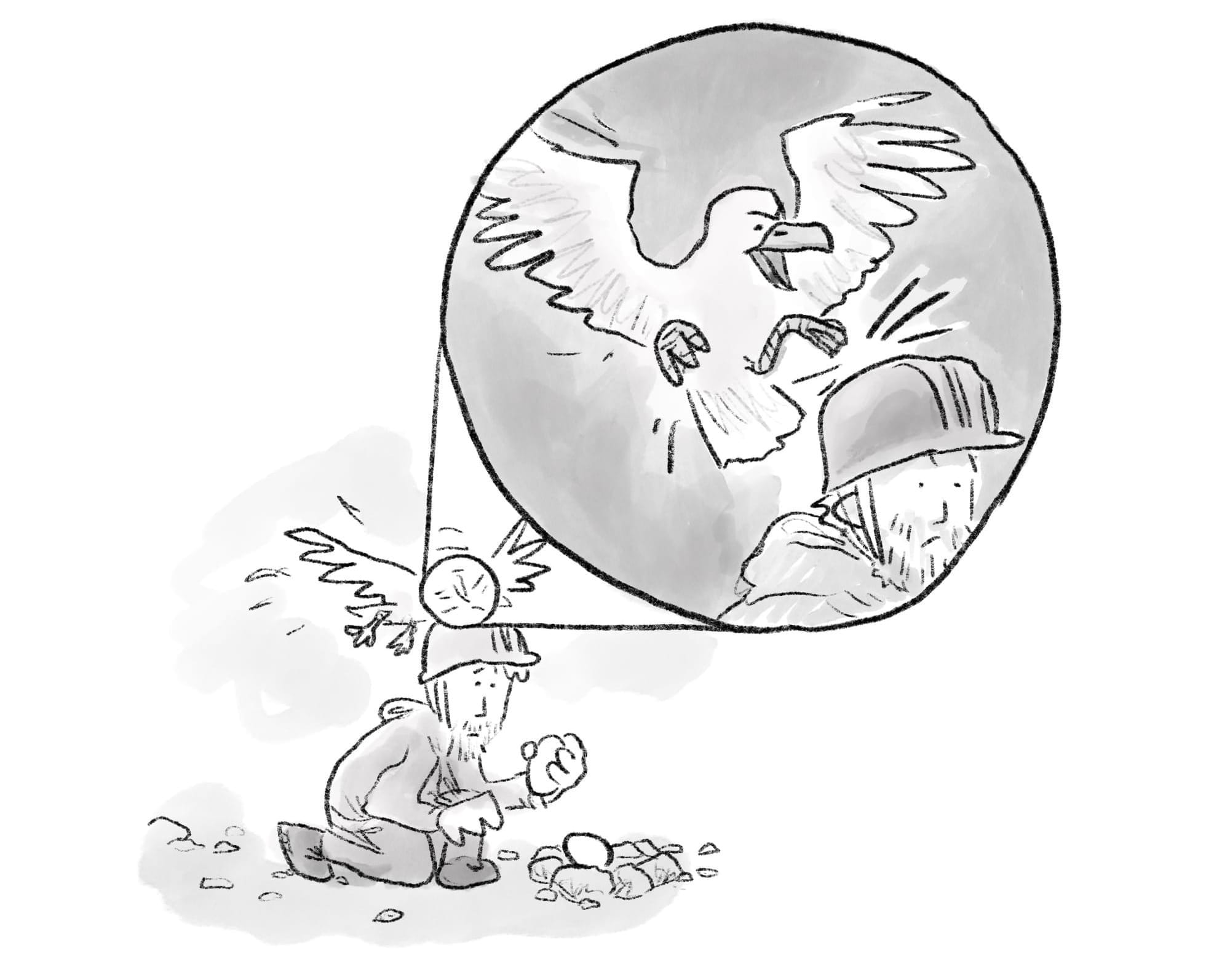
See, you need to go into their areas in order to do important biology stuff. Even handling their eggs, which is like a pretty big violation of trust when you're just a few decades out from your species nearly eliminating theirs.
So hard hat, and a waterproof jacket. A western gull's favorite attack is known as "white splot from above".
Basically, when you're in gull territory, the adults hover on your back, crap on you, and peck at your head (hoping to spill your brains, which they would quickly consume). But you get used to it, and if you rinse the poop off your jacket right away, it doesn't stain or corrode very much.
Now, why I was collecting and measuring gull eggs on this island is not particularly relevant. Because we all know that important field research in cool locations also tends to involve young, underpaid (or unpaid) biology nerds who have a lot of free time to kill and nowhere to go. And that combination tends to deliver some spectacularly silly scenarios.
I've gone over the reckless dares of young field biologists marooned in remote places before (here and here), but I don't think anything compares to what I witnessed on the day.
Because the point of this story is to talk about what happened to one of my colleagues when she lost a bet.
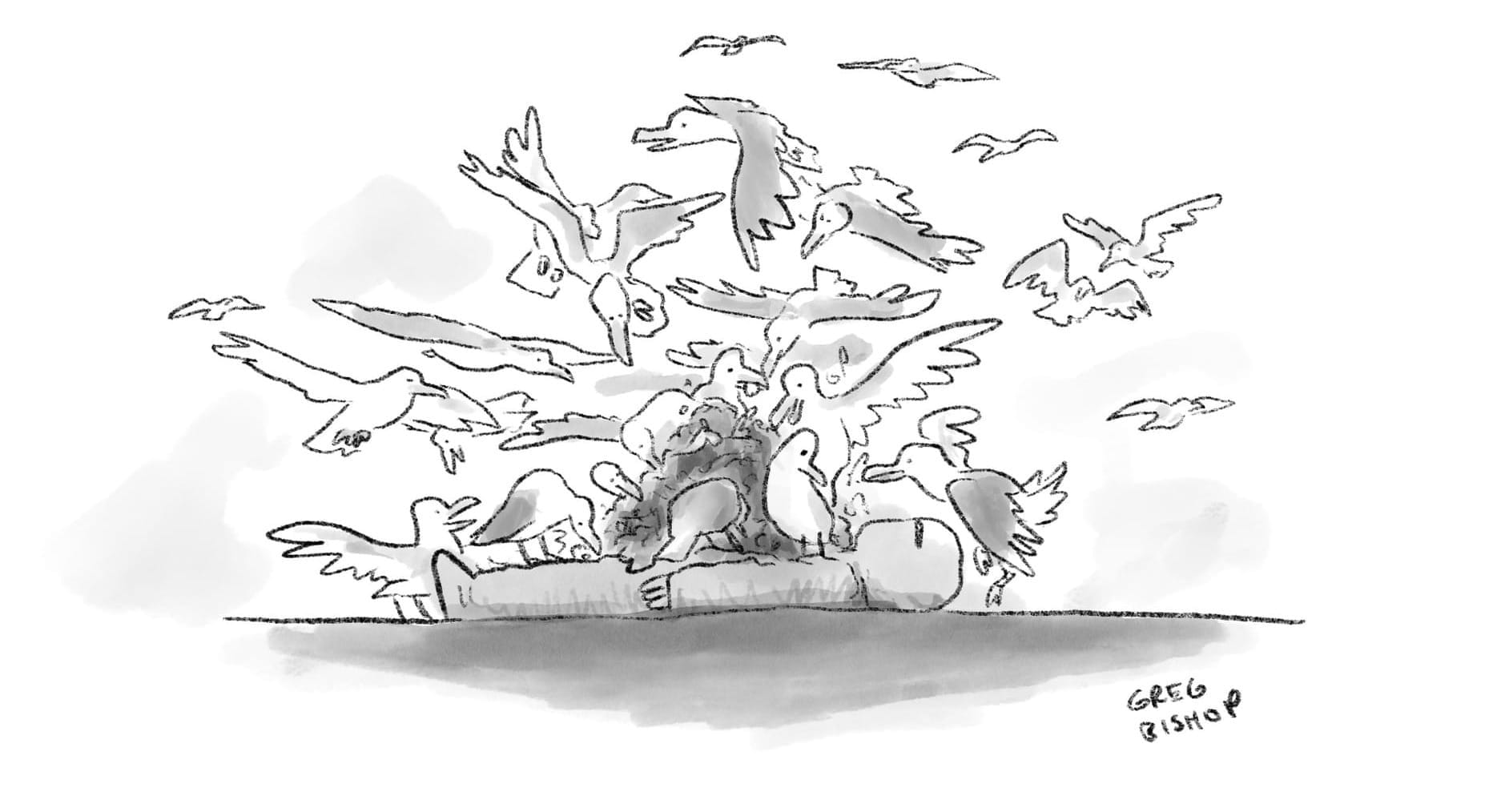
We fed her to the gulls.
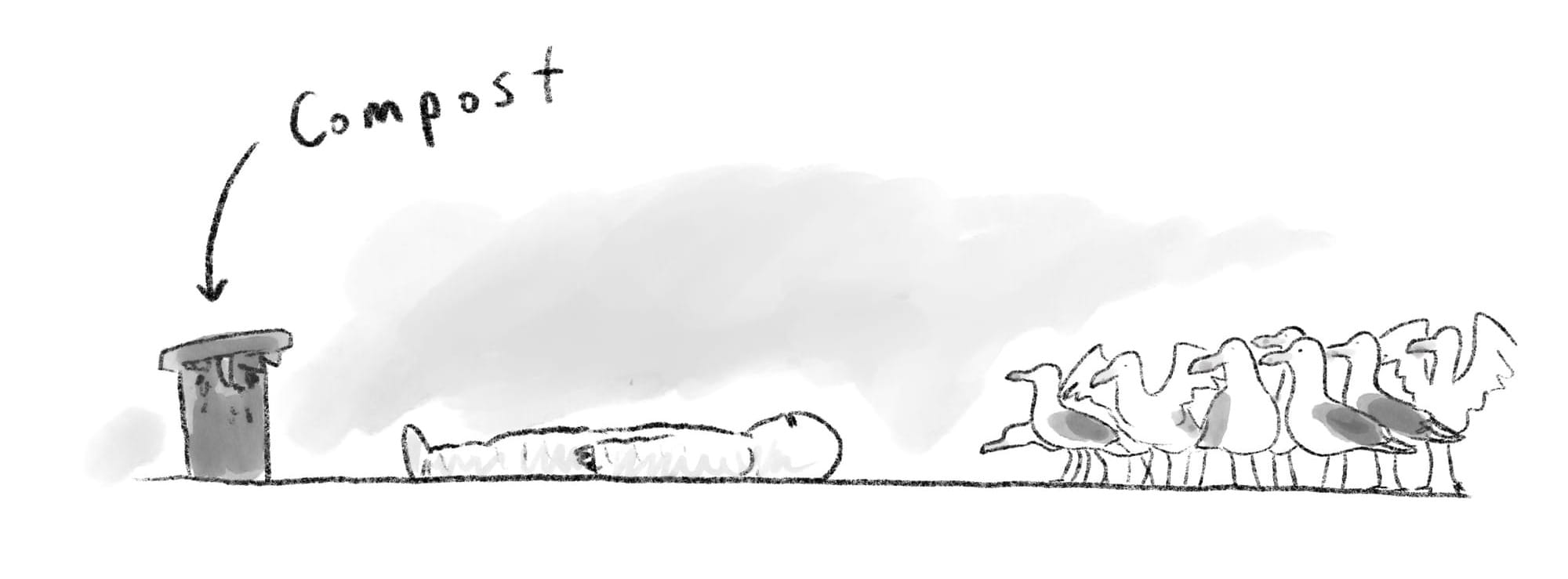
You can imagine our thinking, can't you?!
See, we have all these Tyvek suits available for biohazards (don't worry, there's plenty extra), and, I mean– we're already throwing our compost out for the gulls anyway.
Oh come on–that's interfering with nature? These are garbagivores guys! If we shipped our compost back to the mainland, the birds would just be eating it there and we'd be wasting energy somewhere along the way!
So yes– we were perfectly justified in putting our erstwhile colleague in an impermeable suit and dumping a can of compost on her chest.
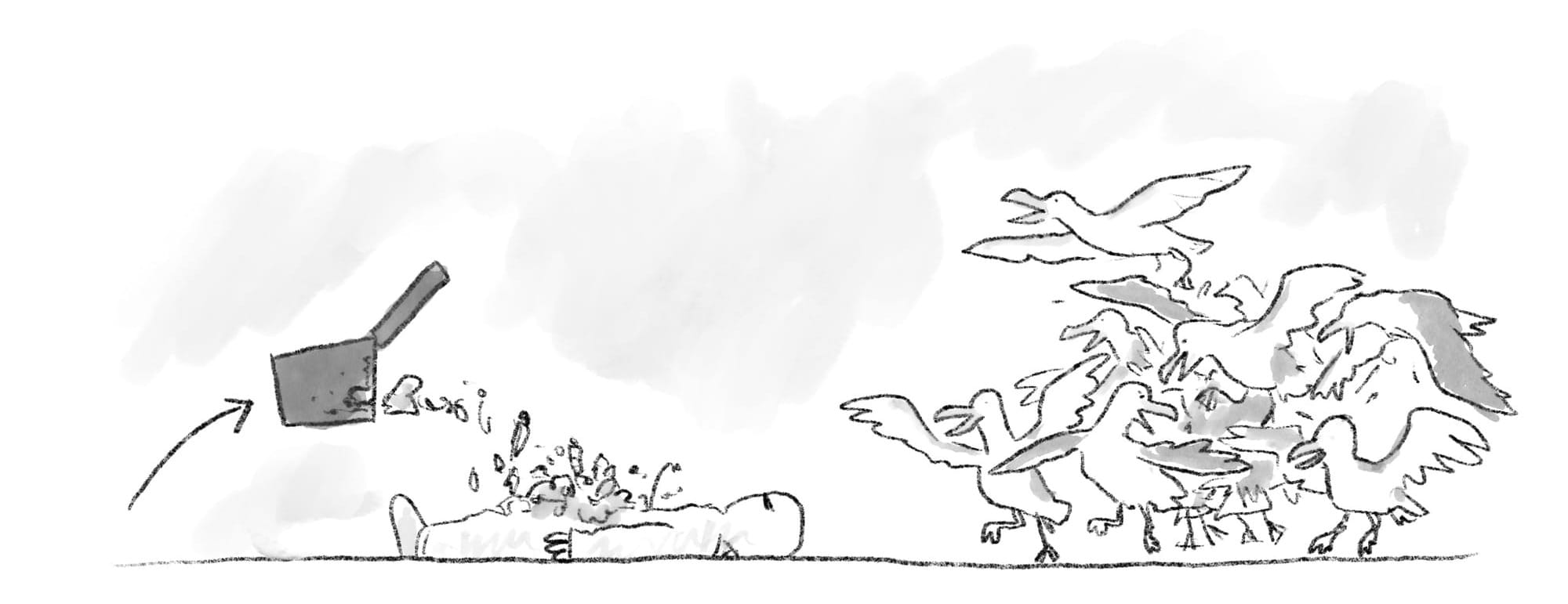
Perfectly justified, indeed.
I mean, she lost the bet.
I know, I know. You still can't condone this type of foolish behavior. Something about it just seems... juvenile. Shameful. Unprofessional.
We were supposed to be privileged stewards of the environment, not rowdy college kids playing pranks with massive piles of rotting litter!
Fair enough–but it was the one time that I ever saw a human out in gull territory, not being attacked. In fact, the birds got right up on top of my friend, curious about this large, human-shaped piece of refuse.
It was an interesting perspective for both sides.
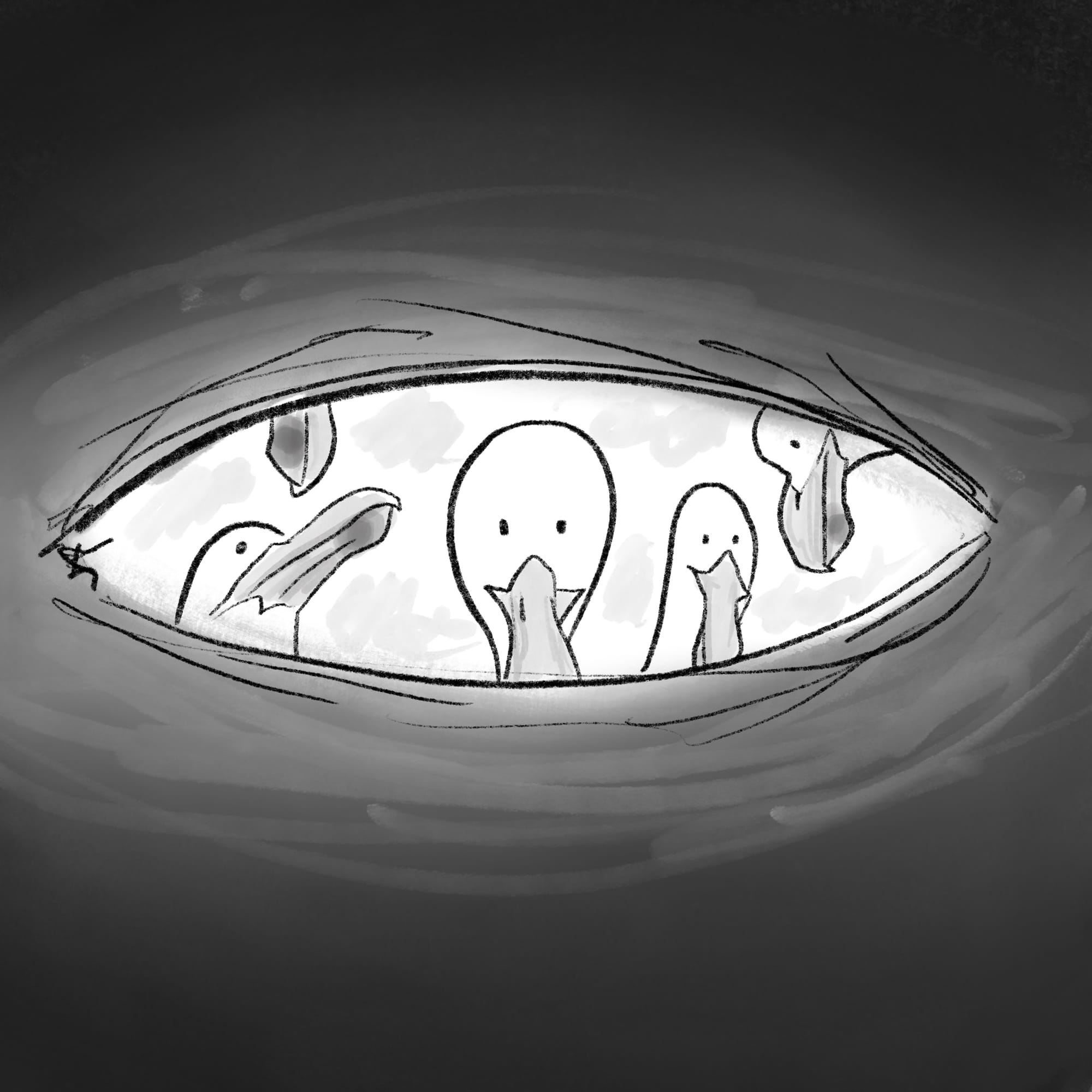
There was a peaceful moment between two species. This place has long been a battleground between them. But for just a second, neither side feared the other.
I mean– no one is an island. Even if you live on an island, and even if you're a a gull and countless generations of your kind have lived there for eons past, you're not truly an island.
You're not alone, you're connected.
Even if your neighbors have occasionally ravaged your lands, or pushed you to the brink of extinction, you're still in this together. It doesn't mean they're all bad.
Sometimes, all it takes to settle things down is a peace offering.
Which might not even be that hard! It could literally be your trash, for goodness sake!
One's waste is another treasure.
I'd call that a pretty sustainable relationship.
* Or stolen, depending on how much agency you give animals, I guess!


Comments ()